The short version
A kids birthday party schedule runs in one order: arrivals, a first game, food, one bigger game, cake, then a quiet wind down. Give ages five to eight two hours, under fives 90 minutes, and nine and up up to three. Put the cake in the last third and write the end time on the invitation.
How long should a kids birthday party be?
A kids birthday party schedule is mostly an argument about length, so settle that first.
Children under five last about 90 minutes before the afternoon unravels. Five to eight do best with two hours. Nine and up can go to two and a half or three, but only if you have something to put in the extra half hour that is not simply more of the same.
The test is whether you will still have a plan at the end. At home, most parents have about 100 minutes of real material. Add a third hour and you spend it watching children drift to the sofa and ask when their parents are coming. A party that stops while everyone wants more is remembered as a good one.
The checklist article covers the four weeks before the day and carries a short run sheet. This one is about the day itself: three complete schedules, minute by minute, and what to change when the real afternoon stops matching the paper.
The 90 minute birthday party schedule
Best for ages three to six, or any small group of six to eight children at home.
| Clock | Block | What is happening |
|---|---|---|
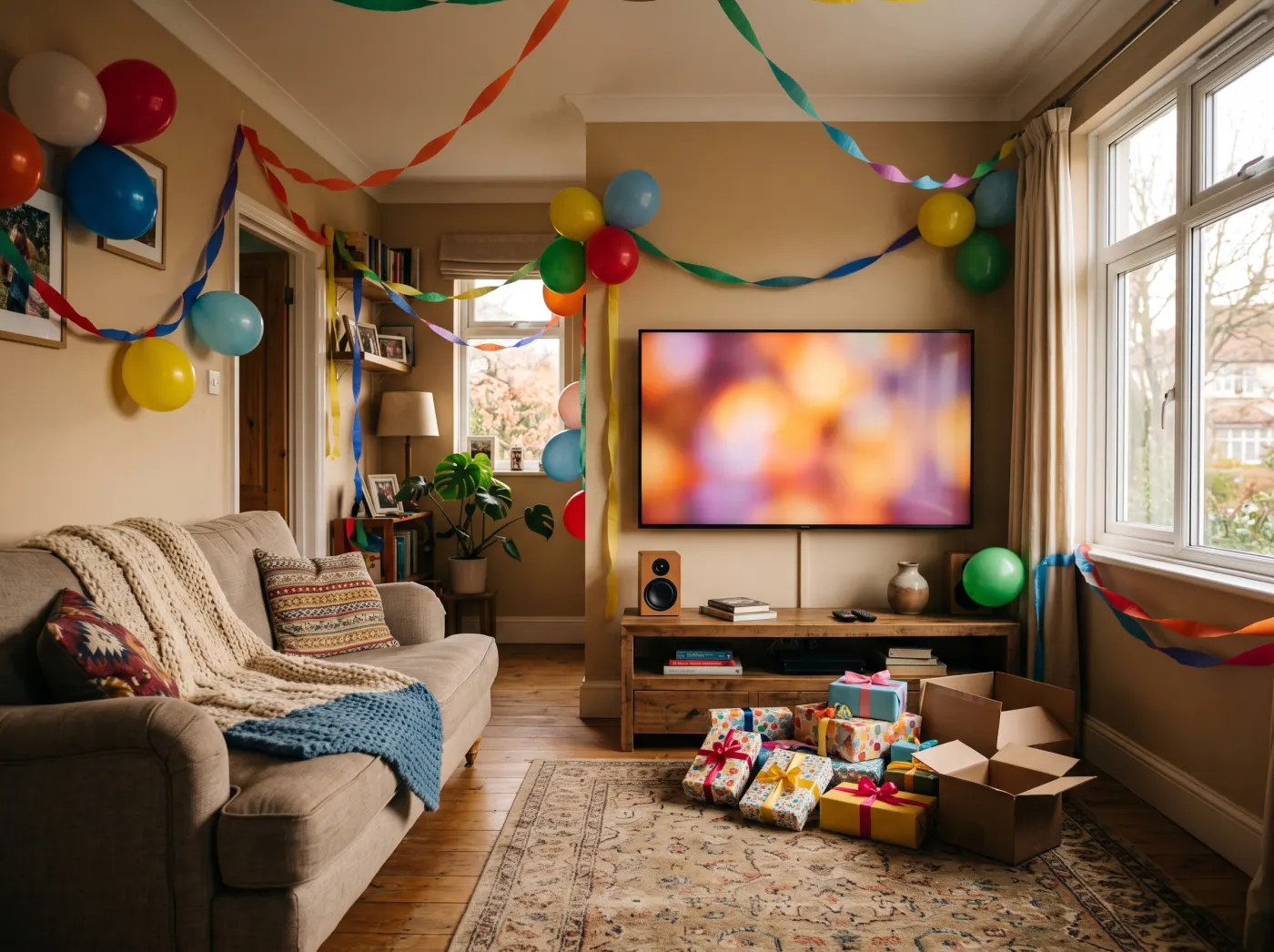
| 0:00 to 0:15 | Arrivals | Coats off, presents in one spot, a floor activity anyone can join. |
| 0:15 to 0:30 | First game | One simple game, no teams, no one out. |
| 0:30 to 0:50 | Food | Grazing and drinks, everyone sitting, a toilet trip for the youngest. |
| 0:50 to 1:10 | Main game | The one with a shape: a hunt, a parade, a challenge run. |
| 1:10 to 1:20 | Cake | Candles, singing, one photograph, slices handed out. |
| 1:20 to 1:30 | Wind down | Something seated while the first parents arrive. Goodbyes. |
Two things make this version work. There is one big game instead of two, because four year olds do not have a second one in them. And the cake is short, ten minutes, because a child that age will eat a slice in four and then have nothing to do with the other six.
If you are hosting five or six toddlers and their parents are staying, you can loosen the whole thing. The adults handle toilets and spills, and you can run arrivals to 20 minutes and drop the wind down to a seated song.
The 2 hour birthday party schedule
This is the default. If you only read one table on this page, make it this one.
Start at 2:00 and the cake is cut at 3:30. Everyone is out by 4:00. It suits five to eight year olds and up to about twelve of them.
| Clock | Block | What is happening |
|---|---|---|
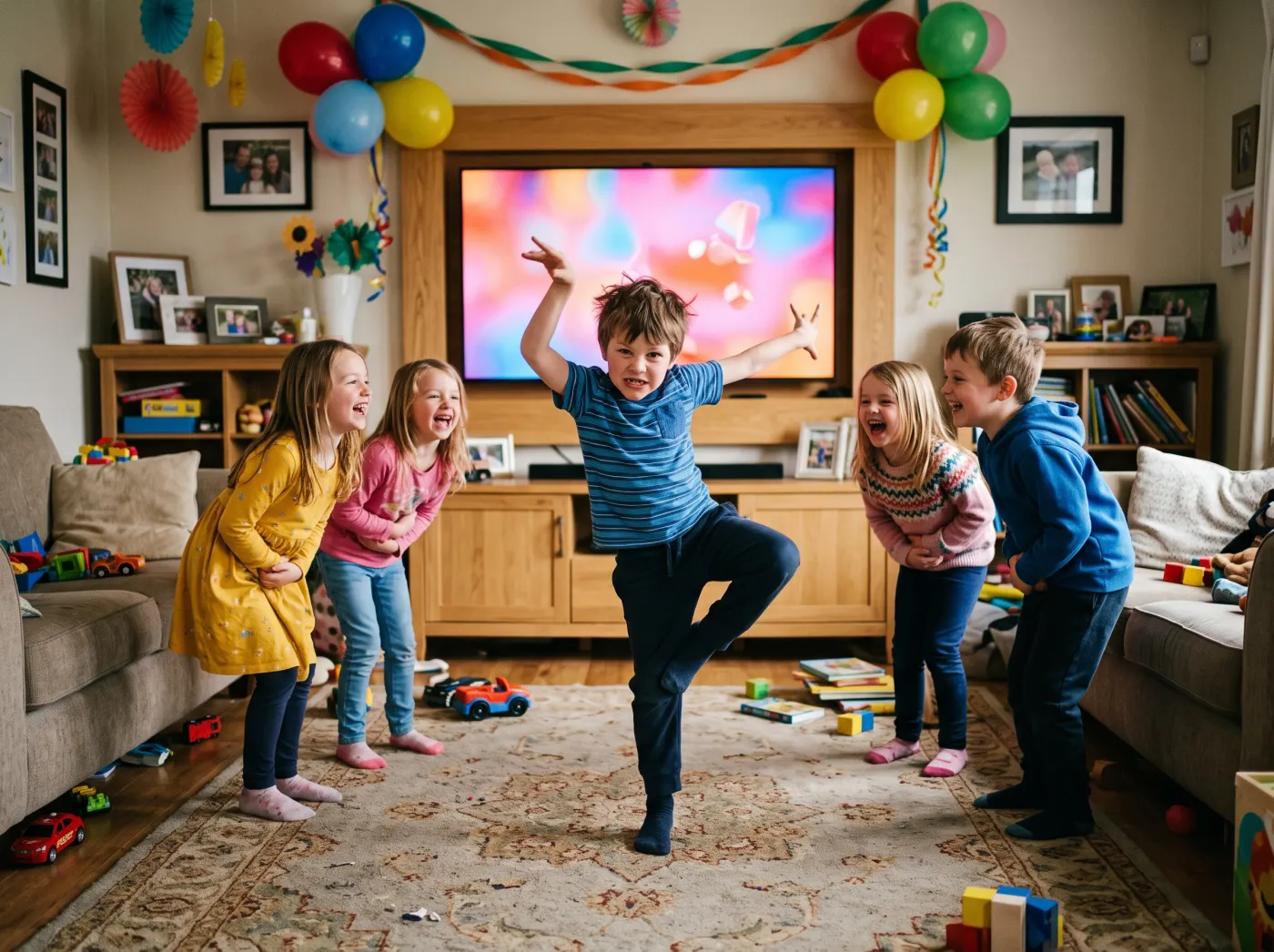
| 0:00 to 0:20 | Arrivals | Door, coats, presents, a quiet floor activity. |
| 0:20 to 0:35 | First game | No teams, no explaining, whoever is here plays. |
| 0:35 to 0:40 | Reset | Hand wash, toilet trip, water. The five minutes everybody forgets. |
| 0:40 to 1:05 | Food | Grazing table, sitting down, the noise drops by half. |
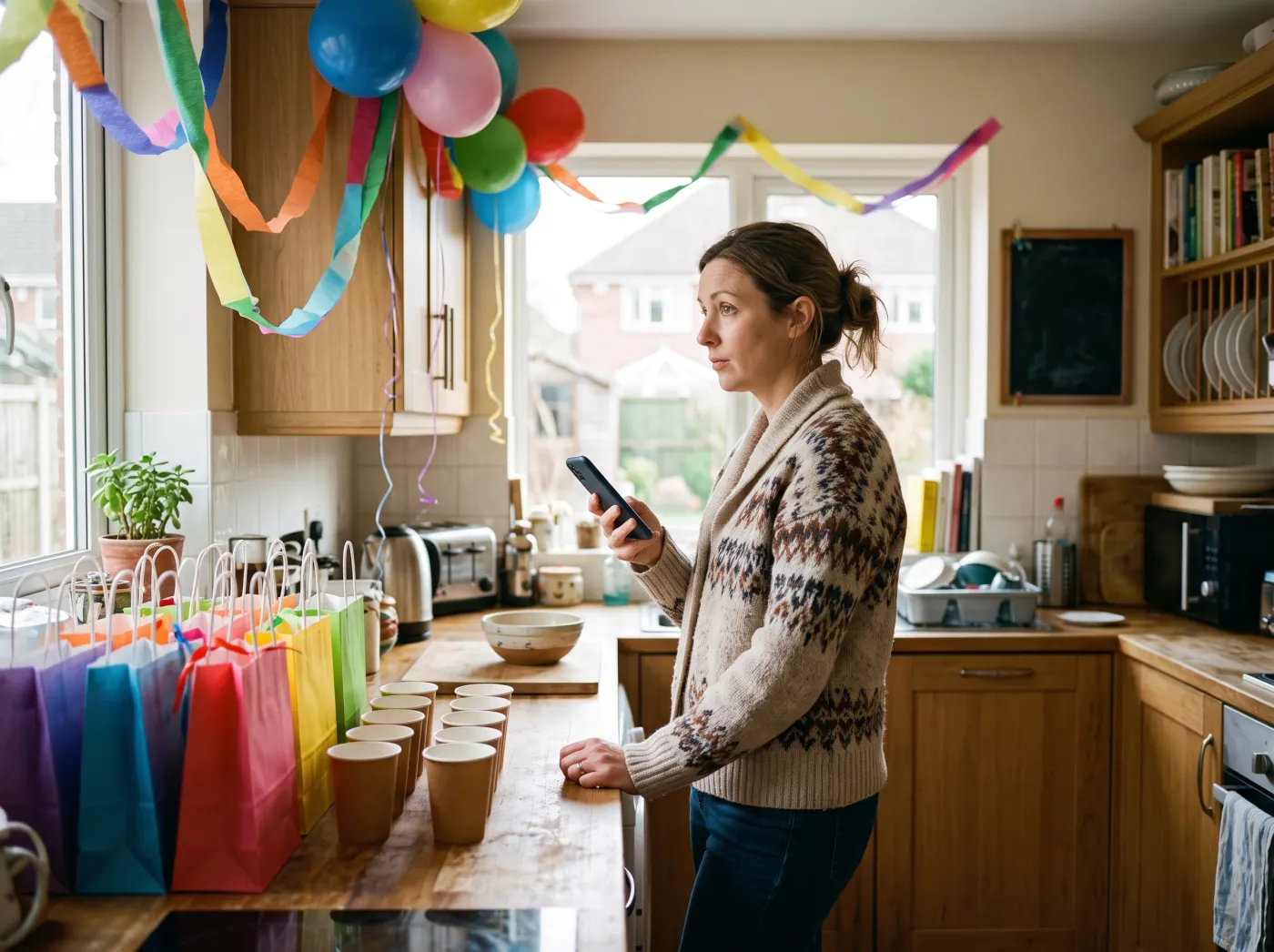
| 1:05 to 1:30 | Main game | Hunt, quiz or challenge run. This is the part they remember. |
| 1:30 to 1:45 | Cake | Singing, candles, photo, slices on plates. |
| 1:45 to 2:00 | Wind down and hand-off | Seated colouring or a film clip, parents arrive, one thing each child takes home. |
The five minute reset between the first game and the food looks like padding. It is not. Without it you hand sticky hands a plate at the exact moment two children need the toilet, and the food block starts with chaos. With it, the children sit down already settled.
The block that matters most is the main game at 1:05. Food is expected and cake is expected, but the half hour after lunch is where a party is either talked about or forgotten. Fill it with something that has a shape to it. Thirty party games sorted by age are the place to pick from, and a scavenger hunt through the house is the one that survives the widest age range. If you would rather not run it yourself, a game built around your child's name, like the one KidBD makes, fills the same half hour and lets you stand at the back and watch.
The 3 hour birthday party schedule
For nine and up, a hired room, or a party with a real activity in it.
Three hours only works if the extra hour contains something different in kind, not more games. That is the 30 minute activity block below: a craft, a baking session, a tournament with brackets. Otherwise, shorten it.
| Clock | Block | What is happening |
|---|---|---|
| 0:00 to 0:20 | Arrivals | Open floor activity, drinks, presents set aside. |
| 0:20 to 0:40 | First game | High energy, fully inclusive, no waiting turns. |
| 0:40 to 1:10 | Activity block | One extended thing: a craft, a bake-and-decorate, a tournament. |
| 1:10 to 1:20 | Break | Water, toilet, five minutes of nothing. |
| 1:20 to 1:50 | Food | A proper sit-down plate plus grazing. This is the real meal. |
| 1:50 to 2:25 | Main game | The big one, long enough to have a beginning, middle and end. |
| 2:25 to 2:40 | Cake | Candles and slices. |
| 2:40 to 3:00 | Wind down and hand-off | Free play or a film clip while parents arrive. |
The food moves later and gets bigger. Older children will eat an actual meal at 1:20, which also means the cake is a smaller moment. Give them the break at 1:10, because nine year olds who have played hard for 70 minutes need five minutes with nothing asked of them, and they will not tell you so.
How to adapt a kids party schedule by age
The blocks stay. The length of each one moves with the age of the youngest child, not the oldest.
Under five
Use the 90 minute table. Keep each game under ten minutes and expect the main game to turn into a parade. Parents will stay, which is useful: put one adult per four children on toilet duty and the rest on tea.
Five to eight
The 2 hour table, exactly. This is the age where the format is most forgiving. If the group is mixed, say a seven year old with two nine year old cousins, plan for the older ones' attention span in the main game and the younger ones' bedtime in the end time.
Nine to twelve
Two and a half hours is plenty, and the extra half hour is the activity block. Older children hate being told what is next. Post the schedule on the wall as a short list and they will self-organise around it.
Thirteen and up
Less schedule, more anchor points. Fix three times: arrival, food, cake. Leave the rest as free time with one organised thing, and say so on the invitation. More ideas by age sit in our birthday party ideas by age.
Birthday party schedule: venue or home?
At a venue the clock belongs to someone else.
A booking for two hours usually means the room, including set up and clear up. Ask the venue two questions: when can we get in, and when must we be out. Then build the schedule backwards from the second answer. A two hour party in a two hour booking leaves you carrying cake out while the next family waits at the door.
- Plan 15 to 20 minutes of the booking for set up and the same for pack down.
- Ask whether food is served on their timetable. Many venues bring pizza at a fixed minute, and that fixes your food block.
- Venues often have a host who runs the main game. Use it, and trim your own plan to arrivals, cake and the hand-off.
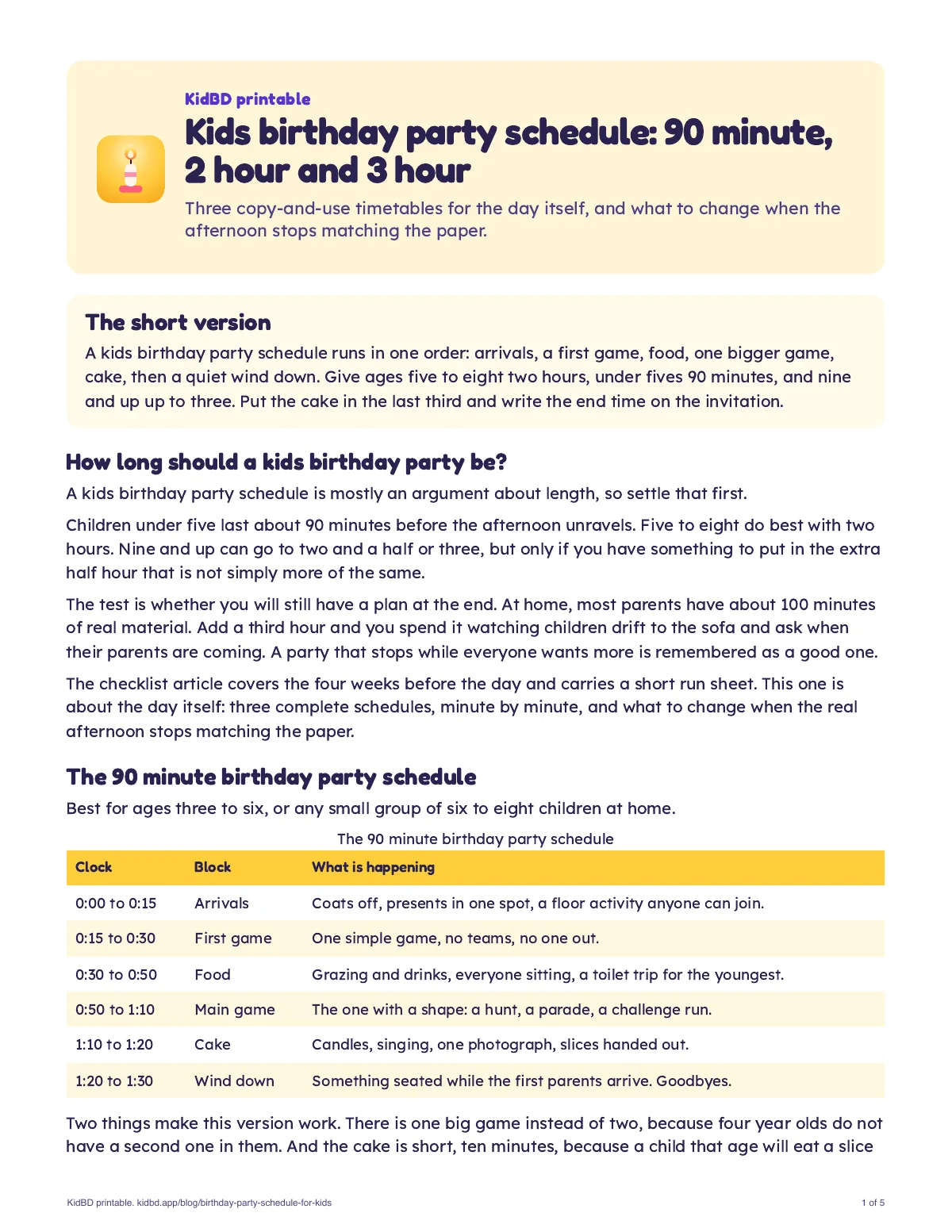
At home the problem is the opposite. Nobody is coming to tell you it is over, so the end time has to be on the invitation and in your own voice. A home party with a fuzzy ending is how you end up with three children left at 5:30 and a kitchen to clear. If you are planning this one at home, the at-home party ideas cover the room layout side.
What to do when arrivals trickle in
They always do. Plan for it and it costs you nothing.
The first twenty minutes are not a start time, they are a window. Of ten invited children, expect three at the door on time, five in the next ten minutes and two who arrive after the first game has begun. Wait for the last two and the first three have been standing in your hallway for half an hour.
- Give the early ones a jobHand them the balloons to hold, or a table to colour. A child with a job is not bored.
- Keep the first game openNo teams, no elimination, nothing that starts with a whistle. A late child can step in on any round.
- Write the start on the invitationSay 2:00 for arrivals and 2:20 for the first game. Parents who read it arrive early.
- Never restartWhen a late family arrives, wave them in. Do not explain the rules to the room again.
What time should the cake come out?
About 30 minutes before the end, never in the middle.
Cake is a full stop. The moment candles are blown out, a child's mind goes to the door. If it comes at the halfway mark, you spend the second half running a party for children who think it is over.
In a two hour party the cake goes at 1:30. Give it fifteen minutes, which is about five to light and sing, two for the photograph, and eight for slices. Keep a second adult on the camera. You will want to be holding the knife.
One practical thing. Cut the cake in the kitchen, onto plates, before you carry it in. Sixteen children watching a knife go through a layer cake produces a queue, and the queue is where the squabbles start. If someone needs a lit candle for the photograph, light one slice.
The hand-off at pick-up
The last fifteen minutes are the part of the schedule nobody writes down.
Parents arrive over a spread of ten to twenty minutes. Your job is to make sure each child leaves the way they came: accounted for, calm and with the right coat. A seated activity makes that possible. A colouring table, a film clip or a quiet game all work, and the point is to stop the room moving while you talk to a parent at the door.
- Put one adult at the door and one in the room. Never the same person.
- Have the party bag, slice or take-home item by the door, not in the kitchen.
- Keep a list of who is expected to be collected by whom. The phone number on the invitation exists for this moment.
- A child is released to the adult you recognise. If you do not, you ask, and you thank them for waiting.
Say the end time out loud ten minutes before. "Parents are coming at 4:00, so we have one last thing." It signals to the children and to any adult still holding a coffee.
What to cut when you are running late
Cut from the middle. Never touch the two ends.
Say the first game has run long, the food took 35 minutes instead of 25, and it is 1:20 with the main game still unplayed. Here is the order of what goes.
- Shorten the resetSkip it as a block. Do toilet trips as the food is served.
- Trim the main game by five to ten minutesA hunt with twelve clues becomes eight. Tell the children there is a final clue.
- Cut a second courseFruit goes out with the cake. The savouries are already finished.
- Drop one game rather than rush twoRushed games are worse than a missing one. Nobody knows what they did not play.
What does not go: the cake and the hand-off. Those are what the parents see and what your child remembers. If you have to choose between a game and a calm pick-up, choose the pick-up.
A birthday party run sheet template you can copy
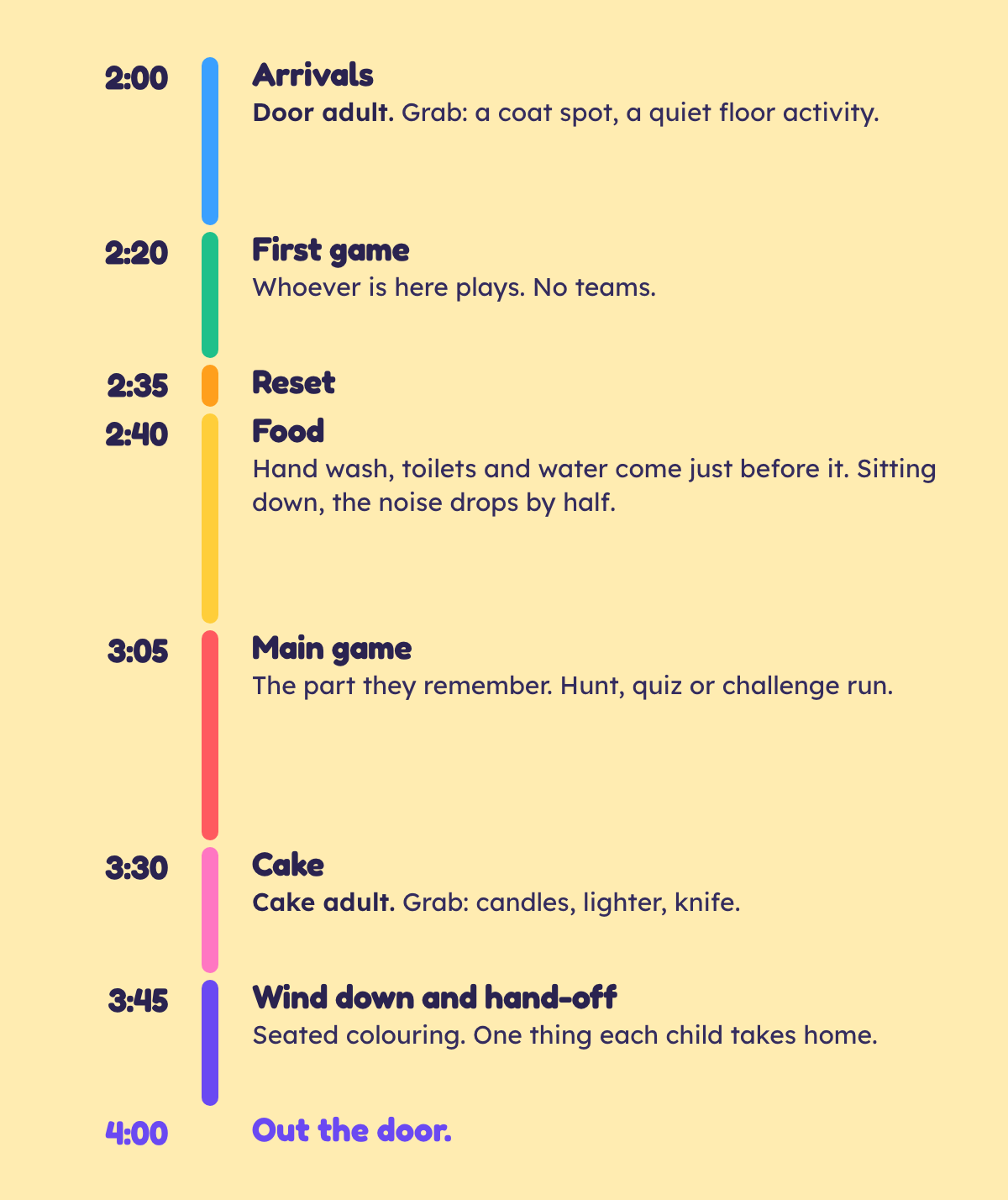
Take whichever table above fits and turn it into a card for the fridge.
A run sheet is a copy of the schedule with the actual clock times, the name of the person doing each job, and what to grab. Four columns: time, block, who, and what is needed. Write it by hand if you prefer, a pen on a card does the job.
- Put real times in, not minutes. "2:20 first game" beats "0:20".
- Name one other adult for the cake and one for the door.
- Add a line for the phone numbers you may need.
- Tick off as you go. It is reassuring to see the page fill.
Send the date and start time out well before. The wording for that is in birthday invitation wording for kids, including the line that fixes the end time.
Questions parents actually ask
How long should a kids birthday party be?
Two hours for children aged five to eight, 90 minutes for under fives, and two and a half to three hours only for nine and up. Past two hours at home you run out of plan before the children run out of energy, and the last half hour goes to boredom.
What time should the cake come out?
In the last third of the party, about 30 minutes before the end for a two hour party. Cake reads as a full stop, so children start leaving in their heads the moment it is cut. Put one short, seated thing after it so parents arrive to a calm room.
What do I do when half the guests are late?
Do not hold the party for them. Keep arrivals as a 20 minute block with an open activity on the floor, start the first game at the 20 minute mark with whoever is there, and let latecomers join in the middle of it. A first game with no teams and no elimination absorbs anyone.
How do I fit a party into 90 minutes?
Drop the separate reset block, shorten food to 20 minutes, and run one big game instead of two games and a challenge. Arrivals 15, first game 15, food 20, main game 20, cake 10, wind down 10. It works best for ages three to six.
Should the schedule be different at a venue?
Yes. A hired room usually has a fixed slot that includes set up and clear up, so your real party is 15 to 30 minutes shorter than the booking. Ask the venue exactly when you can enter and when you must be out, and build the schedule backwards from the end.
What if we are running behind?
Cut food to a single table of grazing, shorten the big game by five minutes, and never cut the cake or the hand-off. Skip a block from the middle, not the ends. The children will not notice a missing game, but they will notice a rushed cake and a chaotic pick-up.