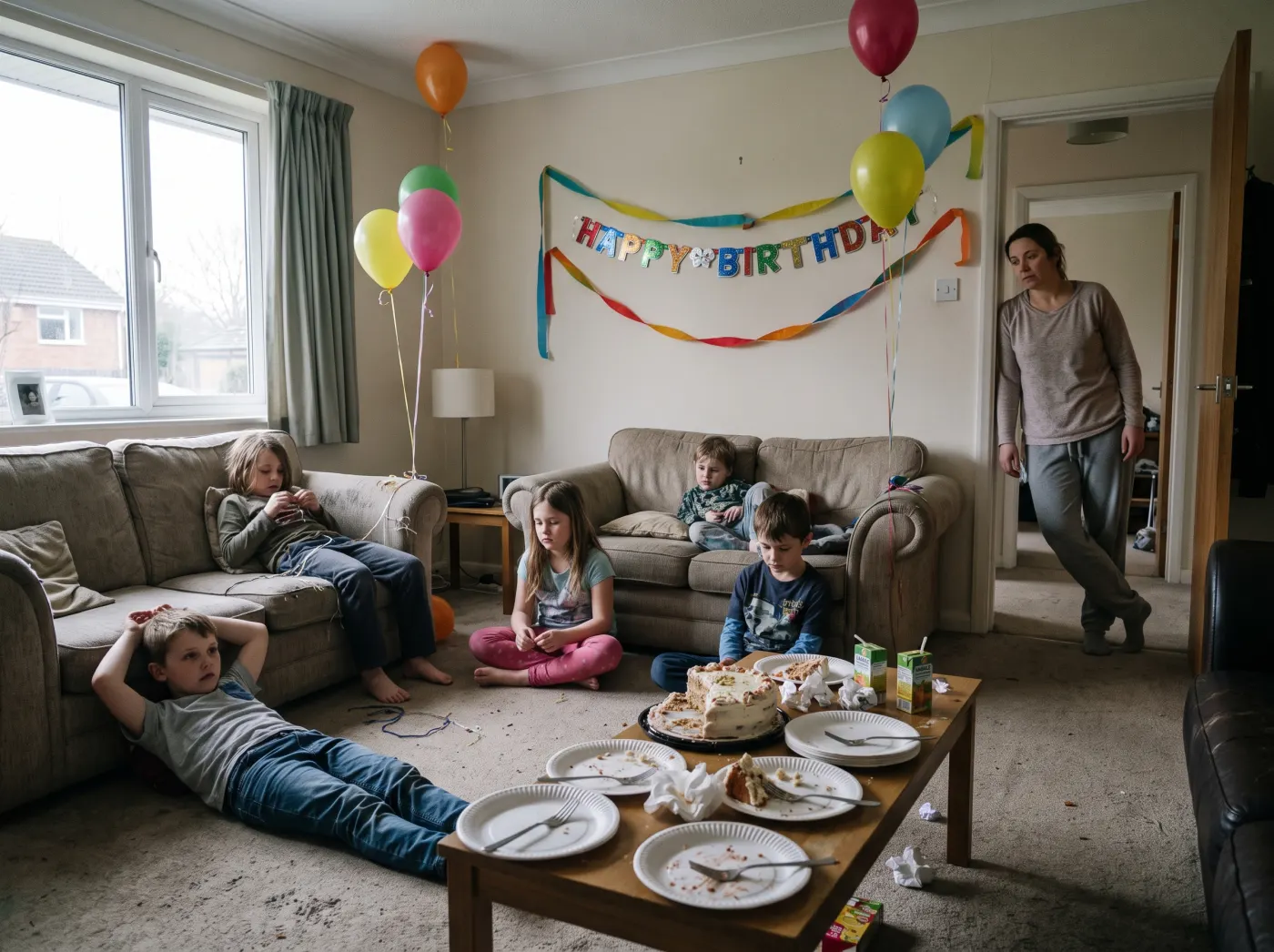
The kids birthday party checklist
Four weeks broken into five short sessions, a run sheet for the day, and the six mistakes that cost you the afternoon. Written for a parent doing this around a job.
Fifteen long reads on running a kids birthday party at home. What to do four weeks out, what to actually write on the invitation, which games hold which ages, and how to build a scavenger hunt in an ordinary house. Nothing to print, nothing to buy.
Four weeks broken into five short sessions, a run sheet for the day, and the six mistakes that cost you the afternoon. Written for a parent doing this around a job.
Four things every invitation needs, wording you can copy for ages three to twelve, and the RSVP line most parents forget to write clearly.
Thirty games sorted by age and by the moment in the party they fix, plus the three formations that rescue a game you have already lost. No shopping and no printing.
Build the route first and the clues write themselves. A route for a small house, twenty clues you can copy by age, and what to put at the end so it does not finish in an argument.
Ideas sorted by what you actually have: a small flat, a living room, a garden, a rainy day or ninety minutes. Four kids or fifteen.
What works at every age from 4 to 15: attention span, group size, the party that fits, and the one thing that goes wrong at each age.
Eight year olds want a challenge, a team and a story for Monday. Eight ideas, a two hour plan, and the fix for the cliques that split the room.
Five year olds last ten minutes on one thing and cannot lose well yet. Eight no-loser ideas, a 75 minute plan, and drop-off or stay.
Ten year olds want a say and a smaller crowd. How to plan it with them, eight ideas, a 150 minute plan and the guest list problem.
Six is the first party made of their own friends. How to step back, eight ideas, a 120 minute plan and the guest list.
Seven wants teams, points and a theme of their own. Eight team games, how to handle losing, a 120 minute plan and the guest list.
Nine wants a puzzle worth solving. A mystery party at home, six puzzles they can crack, a night-before setup and a 120 minute plan.
Twelve wants an experience, not a party. A small group, a plan they helped make, and parents at the edge of the room.
Eleven means small groups and phones in the room. Four to six friends, phone-light games and the photo moments they actually want.
Minute-by-minute schedules for a 90 minute, 2 hour and 3 hour party, plus when the cake comes out and what to cut when you run late.
Thirteen wants to be trusted, not hosted. Eight ideas that hold a room of teens, a run sheet, and where the adult stands.
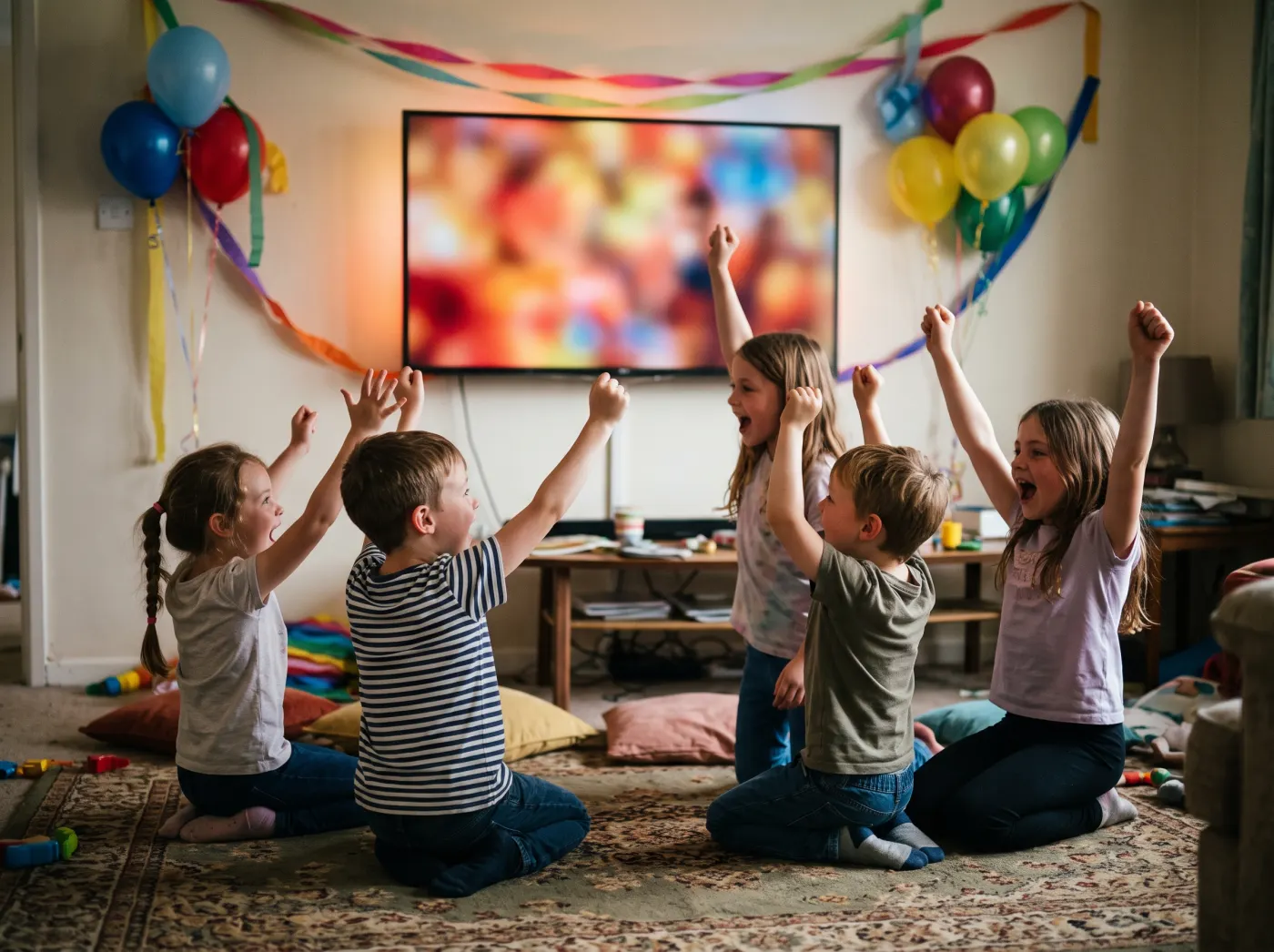
Passive screen time versus active play: what makes a screen game social, and how to run one so every kid is on their feet.
Cost, effort, control and fit side by side, a worksheet for your own numbers, and when each one wins.