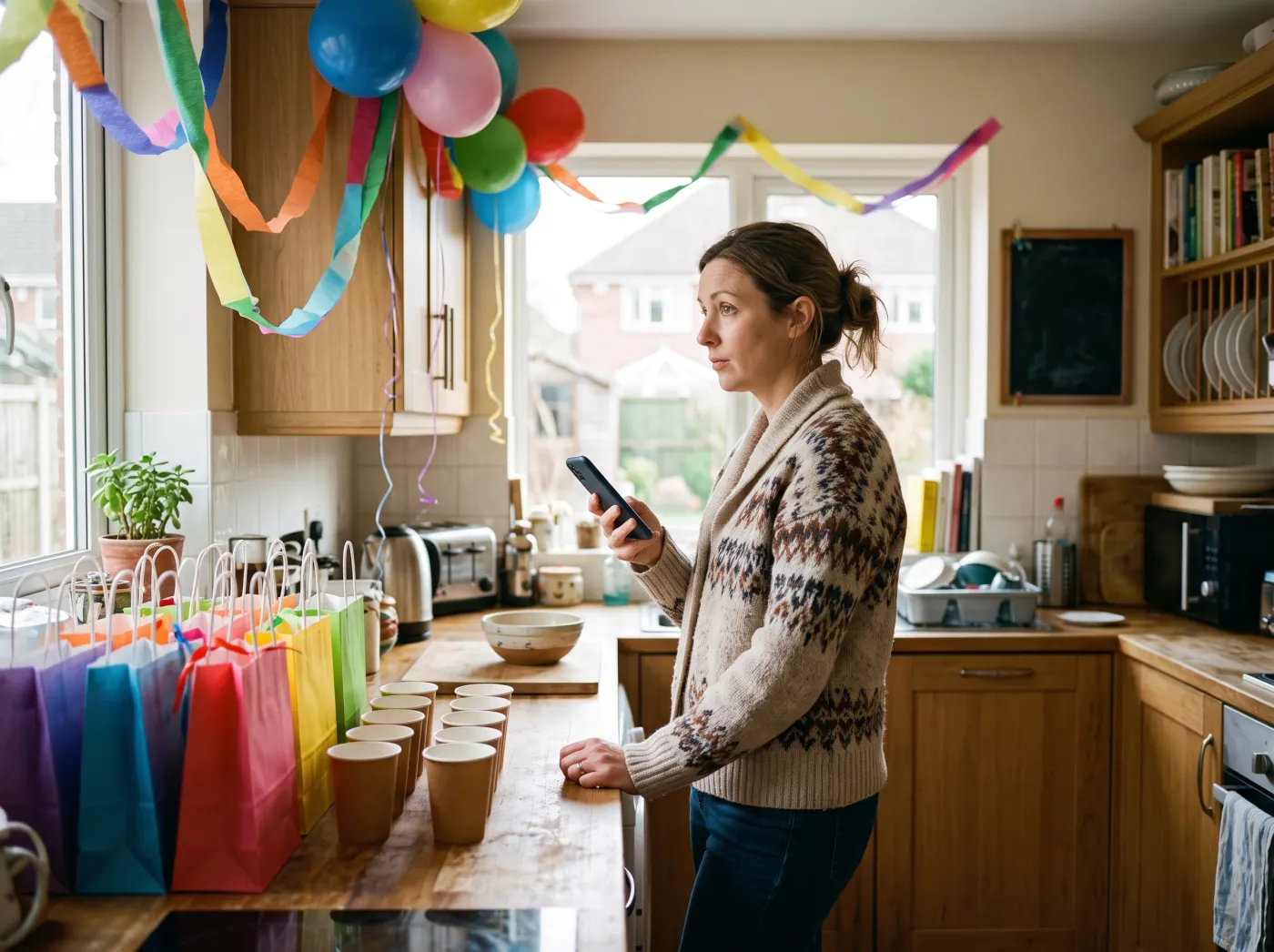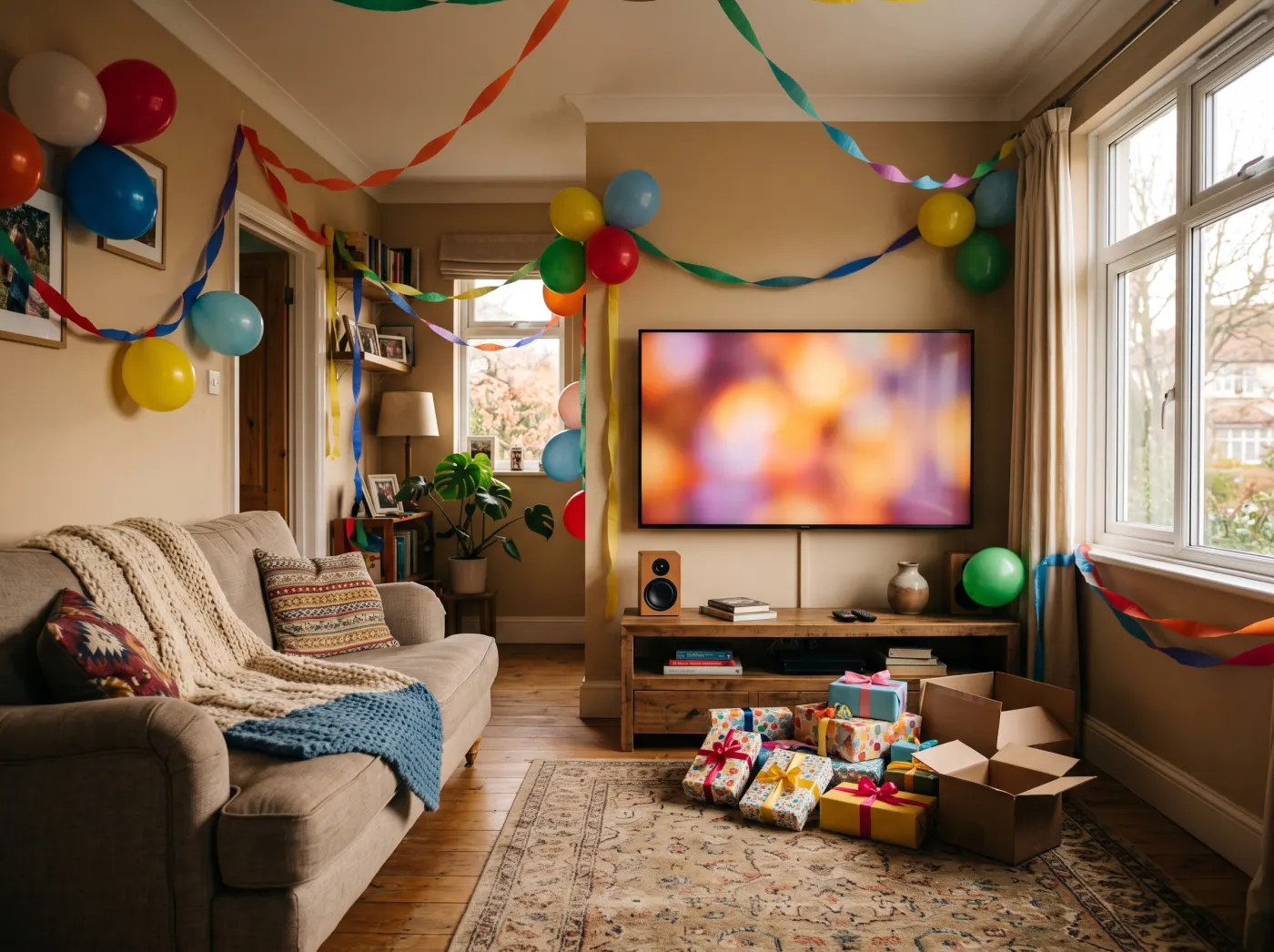
The short version
Choose a venue if you have a large guest list, a small home, little time, and a child who wants a high energy activity you cannot recreate. Choose home if you want the party built around your child, a smaller total bill, control over food and allergies, and a guest list under about twelve.
The deciding question is rarely money alone. It is whether the hours you would save at a venue are worth more to you than the personal touch and the difference in price. A short worksheet below puts both on one page.
Home and venue, side by side
| Factor | At home | At a venue |
|---|---|---|
| Total cost | Food, cake, decorations, one activity | Package per child, plus extras, food upgrades and tip |
| Your time before | Planning, shopping, cleaning | Booking and invitations |
| Your time on the day | Hosting the whole party | Arrive, pay, carry presents |
| Cleanup | Yours | Theirs |
| Guest limit | What your room can hold | The package, with a charge per extra child |
| Personal touch | As much as you put in | Usually a fixed format with a name on a sign |
| Time limit | You decide | Fixed slot, often with the next party waiting |
| Food and allergies | Full control | Their menu, outside food often restricted |
| Noise and energy | You set it | Often loud and busy, hard for some children |
Work out the real cost for your party
Venue prices vary a lot by city and by day of the week, so any figure printed here would be wrong for somebody. Do this instead, with your own quotes, in about ten minutes.
- Get the full venue quoteAsk for the price for your actual guest count, not the base package. Add the per child charge for every guest over the package number, any food or drink upgrade, a party room fee if there is one, tax, and the tip you would leave.
- Price the home party honestlyFood and drink for every guest and the adults who stay, the cake, decorations, party bags if you do them, and one main activity. Add anything you would rent or buy just for the day.
- Put a number on your hoursEstimate the hours a home party takes you: planning, shopping, cleaning before and after, and hosting. Then ask how much those hours are worth to you this month. Not in theory, this month.
- Compare the difference, not the totalsThe real question is whether the gap between the two totals buys you enough hours and calm to be worth it. For some families it clearly does. For others it clearly does not.
Read the venue terms for these four linesThe minimum guest count you pay for whether or not they come, the per child charge above the package, whether you can bring your own cake, and how long the party room is actually yours. These four decide most of the surprise on the final bill.
When home wins
- The guest list is under about twelve. Small groups are where home parties are at their best, and where venue packages charge you for empty places.
- Your child wants it to be about them. A home party can be built around their name, their friends and their in-jokes in a way a fixed venue format rarely can.
- Allergies or dietary needs matter. You control every ingredient.
- Your child finds loud places hard. A venue on a Saturday afternoon is a lot of noise. Home can be calm.
- The age is eleven and up. Older children often prefer food, friends and one good activity to soft play they have outgrown. The ideas for a party at home cover what works by age.
When a venue wins
- The whole class is invited. Twenty or more children is a different event, and most homes cannot hold it.
- The activity is the point. Trampolines, climbing walls, bowling, a pool. Your child wants that exact thing, and you cannot build it in a living room.
- You have no time this month. If the planning hours are not there, buying them is a reasonable decision, not a lazy one.
- Your space is small or shared. A flat, roommates or neighbours below can make a home party more stress than it saves.
Neither choice says anything about how much you love your child. One buys time. The other buys a party built around them.
The middle option
You do not have to pick one end. Many of the parties children talk about afterwards are a mix.
- Park plus home. An hour of running around at a free park, then home for food and cake.
- Smaller venue, smaller list. Six close friends to the cinema or bowling, rather than twenty to a party package.
- Home with one bought-in piece. A home party with one thing you pay for: a cake you did not bake, a hired projector, or a ready-made game that runs the main slot so you do not have to.
Making a home party feel special
The thing a venue cannot sell you is a party about your child. That is where home earns its place.
Put their name in the activities, not only on a banner. Use the friends in the room as characters in the games. End with a moment that is theirs, such as the last clue, a message you wrote, or the gift. And plan the run of the day so you are not stuck in the kitchen the whole time: the party schedule and the four week checklist do most of that thinking for you.
Questions parents actually ask
Is it cheaper to have a birthday party at home?
Usually, yes, because a home party pays for food, cake and one activity rather than a package per child with extras, a party room fee and a tip. The gap varies by city and guest count, so price both with your own quotes before deciding.
Should I have my child's birthday party at home or at a venue?
Choose home for smaller guest lists, a personal party, allergy control and a calmer room. Choose a venue for whole-class parties, a specific activity your child wants, a small home, or a month with no time to plan. Many families do a mix, such as a park and then home.
How many kids can you have at a home birthday party?
Most homes hold six to twelve children comfortably for a party with a main game and a meal. Past twelve, games that rely on one reader stop working and a venue, a garden or a park starts to make more sense.
What hidden costs do party venues have?
Per child charges above the package number, a minimum guest count you pay for regardless, food and drink upgrades, party room fees, charges for bringing your own cake, tax and the tip. Ask for a quote for your real guest count, not the base package.
How do you make a home birthday party special?
Build the activities around your child: their name in the games, their friends as characters, inside jokes, and a final moment that is theirs. Plan the day so the adult is not stuck in the kitchen, and use one main activity that runs itself.
How long should a kids birthday party at home last?
Two hours for children under about eight, two and a half to three hours for older children. That covers arrivals, one main game, food, cake and a short free period before pickup.